this post was submitted on 18 Jan 2026
160 points (94.4% liked)
Linux
62471 readers
1847 users here now
From Wikipedia, the free encyclopedia
Linux is a family of open source Unix-like operating systems based on the Linux kernel, an operating system kernel first released on September 17, 1991 by Linus Torvalds. Linux is typically packaged in a Linux distribution (or distro for short).
Distributions include the Linux kernel and supporting system software and libraries, many of which are provided by the GNU Project. Many Linux distributions use the word "Linux" in their name, but the Free Software Foundation uses the name GNU/Linux to emphasize the importance of GNU software, causing some controversy.
Rules
- Posts must be relevant to operating systems running the Linux kernel. GNU/Linux or otherwise.
- No misinformation
- No NSFW content
- No hate speech, bigotry, etc
Related Communities
Community icon by Alpár-Etele Méder, licensed under CC BY 3.0
founded 6 years ago
MODERATORS
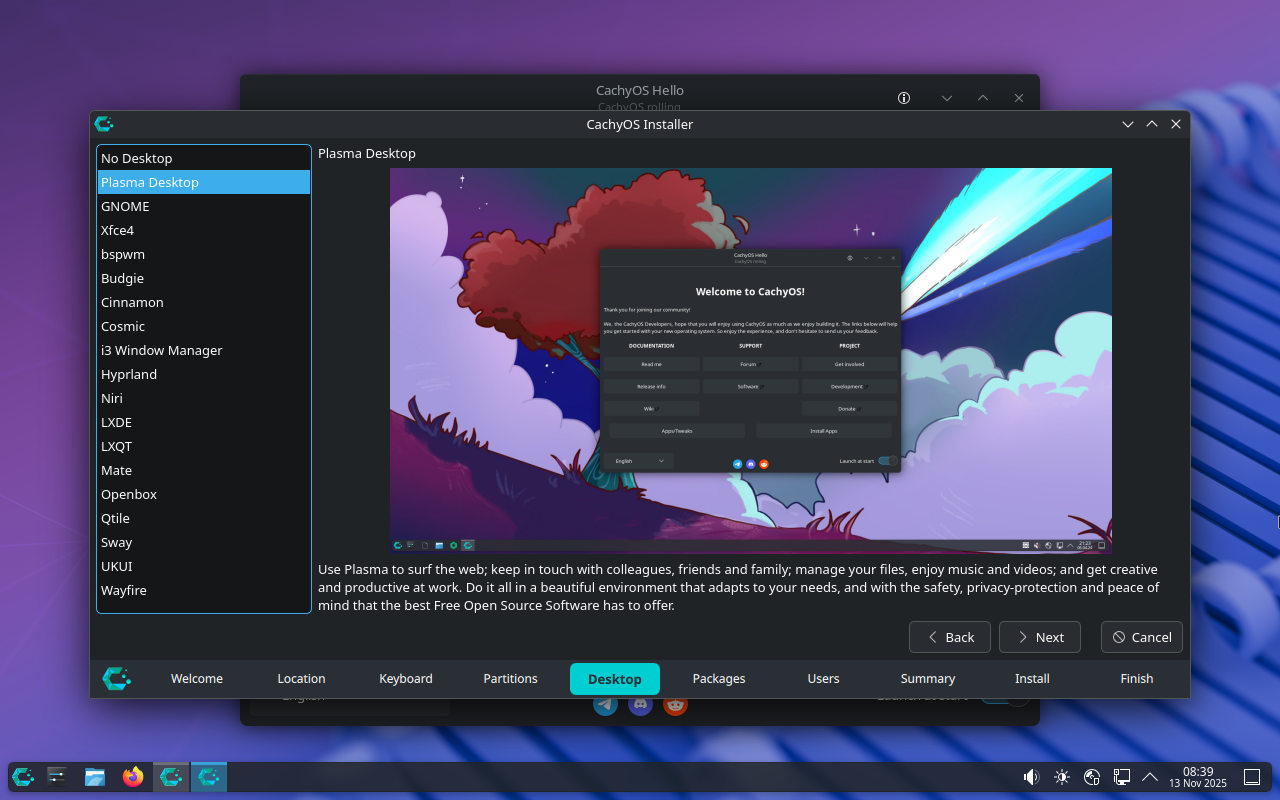
i think that's calamares, so any distro that uses it can technically do this. the reason most don't is that you can just add more DE's after install. i know endeavourOS and openSUSE do this, and i think fedora has something like this too?
but the main reason is to keep install size to a minimum. if you want your system to be installable without an internet connection you can't just ship every DE known to man.
Isn't this advised against? I was told it was simple to do, tried it, it didn't work, then I found loads of people saying to never do it!
when you install a DE as part of system setup it's usually preconfigured by the distro maintainers. otherwise you need to do that configuration yourself, which is more difficult.